31 January 2026
My wax cheat sheet
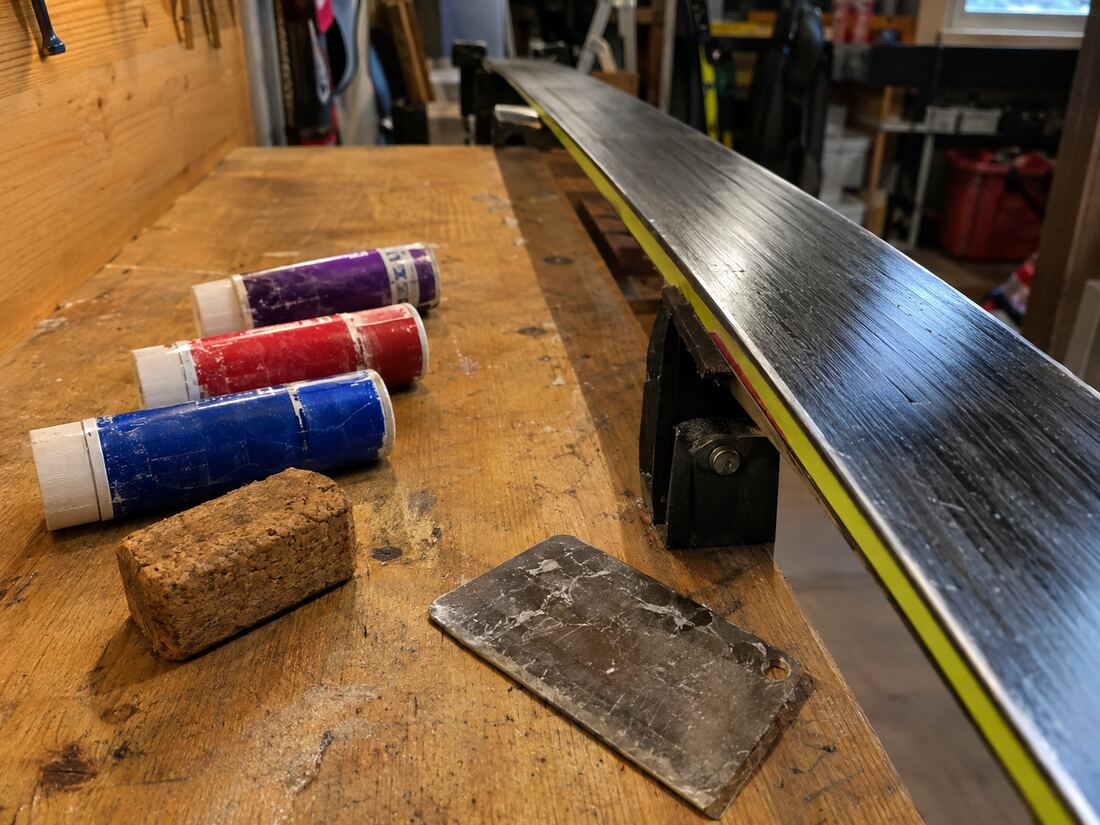
This is my personal cheat sheet, taped to the inside of the garage door. It is not a lab manual, just what works for me on ordinary club trails.
Glide wax
Glide wax goes on the tips and tails. I iron it in, let it cool, scrape and brush. For recreational skiing, a fluor-free universal wax every few outings is plenty. Match the colour code of the brand to the snow temperature, not the air temperature, when you can.
Kick wax
Kick wax goes in the kick zone under the foot. Hard waxes in tins are for cold, dry snow. Klister in tubes is for wet, coarse or icy snow, and it gets everywhere, so keep a rag nearby.
- Thin layers, each corked smooth, work better than one thick layer.
- If the skis slip, add a layer or make the zone slightly longer.
- If the skis clump with snow, the wax is too soft for the conditions.
- Around zero degrees nothing works perfectly. That is what skin skis were invented for.
Cleaning
Wax remover and a scraper before every change of wax type, especially after klister. A clean base takes new wax far better than an old layer ever will.